How to Check MacBook Battery Cycle Count and Health
Discover how to easily macbook battery cycle count check on your MacBook. Follow our simple guide to understand your battery's condition and health.
Goal: This short guide helps you perform a clear macbook battery cycle count check and interpret what the numbers mean for daily runtime and long-term health.
The guide shows where to find the cycle count in macOS and how to verify maximum capacity and condition. You will learn the two places to look in the system UI and which metrics matter most.
Why it matters: A single number does not tell the whole story. Cycle totals pair with capacity and condition to reveal whether a device is normal, aging, or due for service.
Expect practical outcomes: identify status, enable optimized charging features, and adopt simple habits that slow future wear. The focus stays on built-in tools and easy settings first.
Key Takeaways
- Find cycle data in System Report or System Information on macOS.
- Use cycle totals together with capacity to judge health.
- Optimized charging can slow further wear over time.
- Short daily habits help extend usable life.
- Actionable results: normal, aging, or service recommended.
What Battery Cycle Count Means for MacBook Battery Health
How Apple defines a charge over time
Apple counts a full charge as the equivalent of using 100% of the battery’s capacity spread across days. For example, using 50% one day and recharging, then using 50% the next day equals one battery cycle.
Typical ratings and what they imply
Most modern models are rated for about 1,000 cycles, though exact limits vary by generation. At that rated maximum, Apple expects batteries to retain roughly 80% of their original capacity.

Maximum capacity shows current charge relative to new. That percentage usually maps more directly to real-world runtime than the raw cycle number.
Condition labels—like Normal or Service Recommended—tell you if the system detects problems beyond simple wear. A Service Recommended flag often means it’s time to schedule support.
When to consider replacement
- Near the model’s rated cycles and capacity is around or below ~80%.
- Condition flags show service, or you see sudden shutdowns and rapid drain after a full charge.
- Moderate cycles but steep capacity loss—this suggests faster-than-expected wear and potential issues.
Next, you will see exactly where macOS displays these metrics and how to use them to decide if service or replacement is needed.
macbook battery cycle count check in System Report (macOS Sonoma and newer)
To view detailed power metrics, open System Settings and use the built-in path to the System Report.
Exact path: System Settings > General > About > scroll to the bottom > System Report…
In the System Report window, click Power in the left sidebar. The Power pane holds the key entries under Health Information.
Look for the label “Cycle Count” under Health Information and record that number for future comparison. Also copy the Condition status and the Maximum Capacity percentage.
“If Condition reads Normal and maximum capacity is high, a higher count can still be acceptable.”
Quick audit: check this area monthly or quarterly to track how fast totals rise. This method uses only built-in system tools and requires no third-party apps. It works well when performance drops suddenly and you need reliable data for troubleshooting.
Alternate Way to Find Cycle Count Using System Information
Quick access for experienced users
For a fast, alternate way to view health metrics, hold the Option key and click Apple in the menu bar. Then choose System Information. This route avoids extra navigation through settings and often feels faster.
Using the Option key with the Apple menu to open System Information
Hold Option, then click Apple and select System Information. Do not use “About This Mac” by mistake.
Where Cycle Count appears under Battery Information
In System Information, pick Power from the sidebar. Battery details live in the Power section, not mixed with other hardware lists.
Under Battery Information and Health Information you will see the cycle count listed as a plain number. Note the value and the date for tracking.
Compare this readout with the System Report method to confirm you are seeing the same metric. The Power section also shows condition and maximum capacity, so review those fields together for a clearer health view.
Check Battery Health, Capacity, and Charging Features in System Settings
System Settings provides a clear readout of health and the maximum capacity percentage in modern macOS releases. This view helps you judge real-world runtime and spot early issues.
How to view health and maximum capacity
Open System Settings > Battery and click the circled i next to Battery Health. The screen shows maximum capacity as a percent.
What it means: lower capacity generally equals shorter battery life, even if charging looks normal.
How optimized charging reduces wear
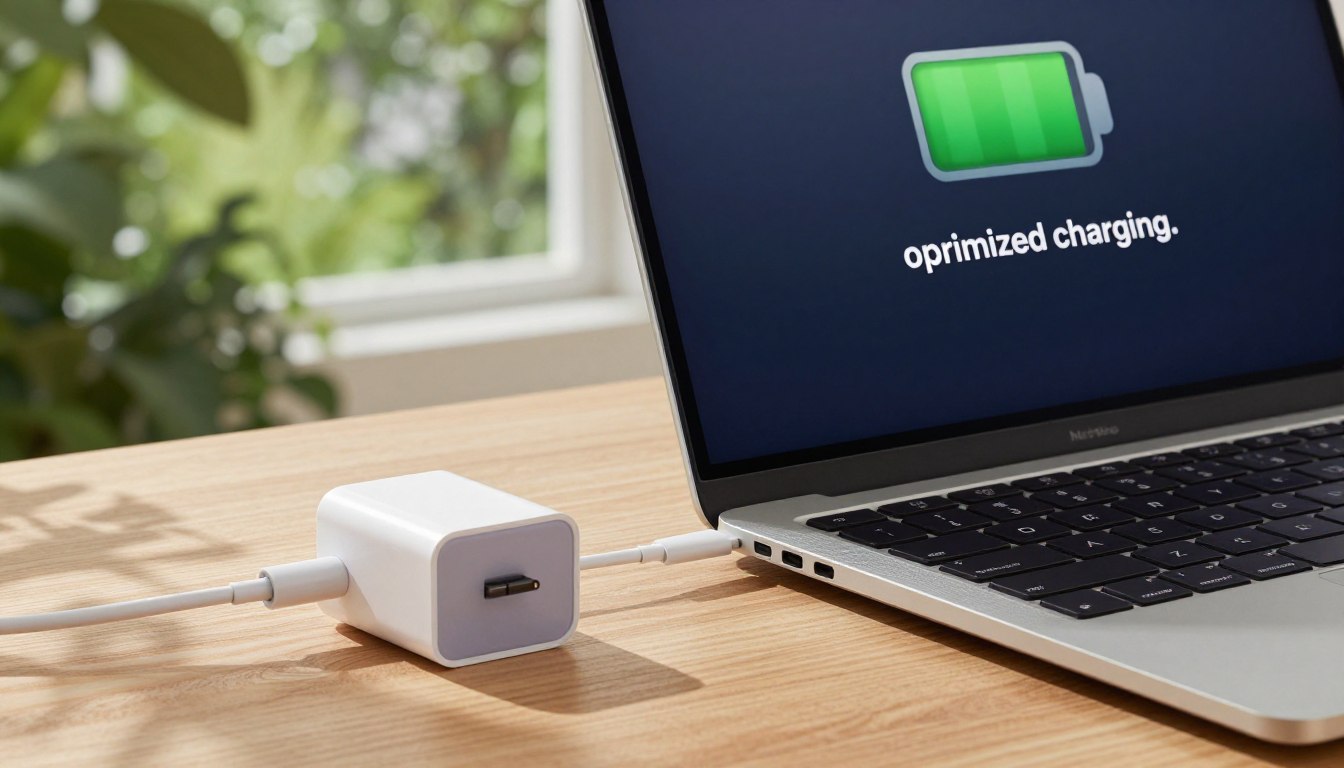
Optimized Battery Charging learns your routine and pauses charging near 80%, topping up just before you unplug. This reduces wear across many cycles and extends overall life.
Settings that improve per-charge runtime
- Dim display and turn off unused radios in Settings.
- Close heavy apps and background tabs to cut drain.
- Use Low Power Mode for long sessions away from a charger.
Low Power Mode and quick habits
Enable Low Power Mode during travel or long meetings. Expect reduced performance in exchange for longer runtime.
Simple habits help: keep macOS updated, avoid extreme temperatures, and store the device near 50% if unused for weeks. If capacity falls fast or a service message appears, document the metrics before seeking service or replacement.
Conclusion
Finish by combining the two system methods so you judge wear from numbers and real-world runtime together. Use both the System Report and System Settings views to form a clear picture.
Apple defines a full cycle as using 100% of capacity across days, so multiple partial uses add up over time. This gradual accumulation is normal.
strong, apply a simple rule: if maximum capacity stays near original and the condition reads normal, continue use. If capacity drops toward ~80% and condition flags service, plan replacement.
Set a quick re-check every few months, keep Optimized Battery Charging on, use Low Power Mode when needed, and save the current count and capacity numbers. If problems persist, contact Apple Support or an authorized service provider.