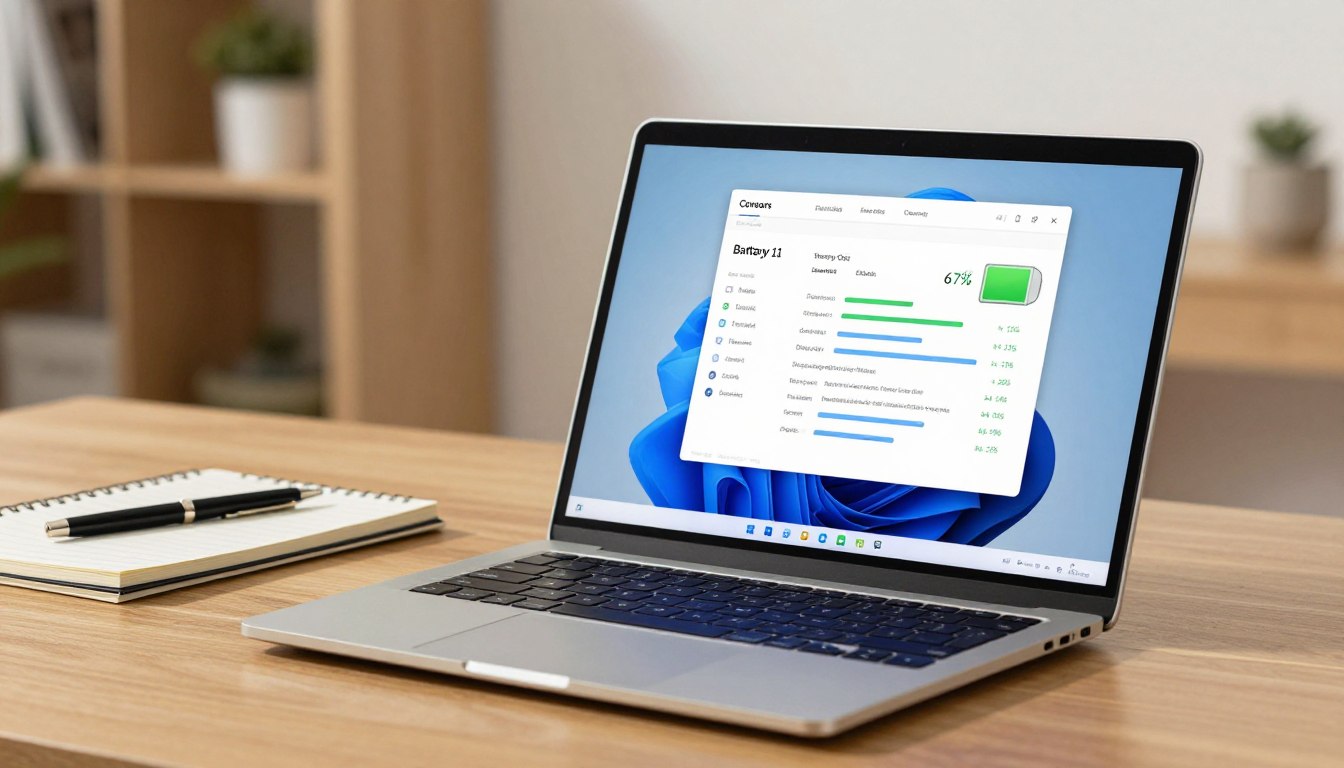
How to Check Battery Cycle Count on a Laptop
Learn how to check laptop battery cycles to assess your laptop's battery health and lifespan. Simple steps inside.
This short guide shows how to find the cycle count and key capacity numbers so you can judge wear fast.
The easiest route on Windows is to generate a built-in power report that lists design capacity, full charge capacity, and, when supported, the cycle count. Many makers also expose the same info in BIOS/UEFI, on-board diagnostics, or vendor apps such as Dell SupportAssist and Dell Power Manager.
Cycle count is a simple indicator of how much a power pack has been used over time and why runtime drops as it ages. Knowing the number and current capacity helps you decide if reduced runtime is normal aging or if a replacement is due.
This guide focuses on modern devices running Windows 10 and 11 in the United States, and it covers fixes when the report omits the count. Steps use built-in tools first, with optional third-party utilities if you want a quicker view.
Key Takeaways
- Use the Windows battery report to find cycle and capacity numbers quickly.
- BIOS/UEFI and vendor apps often show the same data when Windows does not.
- Cycle count correlates with reduced battery life over years of use.
- Start with built-in tools; third-party apps are optional for convenience.
- Knowing the number helps decide whether to optimize, update, or replace.
What battery cycle count means for laptop battery health and battery life
Cycle count tracks how much of a power pack’s stored energy has been used over time. One cycle is the equivalent of using 100 percent of the pack’s charge, even if that use comes in parts.
For example: dropping from 100 percent to 50 percent, recharging to full, and later dropping to 50 percent again equals one cycle. That simple math shows how everyday use adds up.
Two key numbers tell the story: design capacity and full charge capacity. Design capacity is what the pack held when new. Full charge capacity is what it holds now at a declared full charge.
When full charge capacity is notably lower than design capacity, you will notice shorter unplugged life even if the system is otherwise fine. Rising cycle count often goes hand in hand with shrinking capacity.
“A small percent gap between design and full charge capacity usually means healthy performance; a large gap signals meaningful wear.”
Temperature, age, and heavy use can speed wear beyond counted cycles. Windows can reveal these numbers in a battery report, which helps explain why capacity has dropped.
How to check laptop battery cycles with the Windows battery report
Start here to create a clear HTML report with Windows tools that shows capacity numbers and, when available, the cycle count.
Run Command Prompt and create the report
Use Windows search to find Command Prompt. Right-click and choose Run as administrator to avoid permission issues.
At the prompt, run: powercfg /batteryreport. To place the file where you can find it, use a short output name like /output c:\breport.html.
Locate the file and open it in your browser
Windows prints the exact file path in the prompt when the command finishes. By default the report often lands inside your user profile folder.
Open the generated battery-report.html in a browser and confirm the report date/time at the top so you know it is current.
Find Installed batteries and usage sections
Scroll to the Installed batteries section. Note three fields: Cycle Count (if shown), Design Capacity, and Full Charge Capacity. These explain wear and current capacity.
Use the Recent usage and Battery usage sections to see charge, power draw, and time patterns. Look for repeated heavy workloads or long unplugged sessions that shorten runtime.
Interpret percent differences and track trends
Compare design capacity vs. full charge capacity to estimate percent wear. A 20% drop means roughly 20% less runtime at full charge than when new.
Save the file and rerun monthly to track trends over time. That simple habit gives clear information for deciding when to optimize, update drivers, or replace the pack.

Other ways to check battery cycles and fix missing cycle count information
If the Windows report omits cycle data, firmware and vendor tools usually provide the missing details.
Check firmware and run on‑board diagnostics
Many systems show battery health in BIOS/UEFI menus. This is valuable when the report lacks capacity numbers.
Some vendors include pre‑boot tests. For example, Dell’s one‑time boot (F12) runs diagnostics and can return health codes like 2000-0131, 0132, or 0133.
Use official manufacturer utilities
Vendor software often gives a friendly view of status. Tools such as Dell SupportAssist, Dell Power Manager, Dell Optimizer, and Lenovo Vantage can display cycle count and health states (Excellent/Good/Fair/Poor/Unknown).
https://www.youtube.com/watch?v=Ss7cn0eq2s0
If the report shows no cycle count: update battery and chipset drivers, restart, then apply UEFI/BIOS updates. Firmware fixes often restore accurate reporting.
Optional third‑party tool
BatteryInfoView (NirSoft) can list design and full charge capacity plus a cycle count without installation. It logs live data but cannot recreate past history if it was not running.
“Missing cycle data is usually a reporting or firmware limitation, not proof of zero wear.”
| Method | What it shows | When to use |
|---|---|---|
| BIOS/UEFI | Battery health, basic capacity | When Windows report is incomplete |
| Manufacturer tools | Cycle count, health status, recommendations | For user-friendly diagnosis and replacement guidance |
| BatteryInfoView | Design/full charge capacity, live count | Quick external view without deep menus |
Combine cycle count, design vs. full charge capacity, and usage patterns to judge if reduced device life is normal wear or needs a replacement.
Conclusion
, Generating a Windows battery report gives the fastest snapshot of current health and long‑term wear.
Run the report and compare design versus full charge numbers to judge real wear. Fewer charge events and a small percent gap usually mean better battery life.
If the report omits history, use BIOS/UEFI or the manufacturer app and update drivers or firmware before assuming a problem. That troubleshooting flow fixes most reporting issues.
If runtime no longer meets daily needs and capacity has fallen significantly, a replacement can be an affordable way to extend a laptop’s useful years.
Rerun the battery report over time, keep firmware updated, avoid extreme heat, and use sensible power settings to preserve health and time between charges.