Why Battery Life Gets Worse After a Windows Update
Is your battery life worse after a Windows update? Find out the reasons behind the problem and explore solutions to restore your battery's health. (155 characters)
This guide explains why a device can feel like it loses charge much faster right after a system update. In simple terms, “battery life worse after update” means shorter time between charges, faster percentage drops, a warmer phone or laptop, or unexpected standby loss.
Often this spike in power use is temporary. The system runs background tasks that re-optimize apps and rebuild caches. Those jobs raise CPU activity and heat, and that can look like sudden battery drain.
Problems fall into three buckets: routine post-update housekeeping, settings or features that change quietly, and real issues such as bugs or app compatibility gaps. The goal here is to find what is actually consuming power, then apply the highest-impact fixes first.
We also separate true drain from perception: new features, more screen time, or habit changes can make runtime seem shorter. The troubleshooting flow in this article will confirm background activity spikes, review usage, correct settings, refresh apps and patches, and then check health and temperature. Most steps apply after any software update, with Android examples where helpful.
Key Takeaways
- Short-term higher drain is common while the system finishes background work.
- Look for changed settings, new features, or buggy apps as sources of excess power use.
- Follow a stepwise check: background activity, usage stats, settings, app updates, then health checks.
- Perception matters—more screen time or new apps can mimic real drain.
- Apply the biggest fixes first before assuming the hardware has failed.
What Changes After an Update and Why Battery Drain Can Spike
Right after a major system refresh, your phone can run heavy work invisibly for hours. The OS may recompile apps, clear caches, and re-index files. These background tasks raise CPU use and make the device warmer.
Background re-optimization and cache cleanup
App recompilation and cache cleanup happen quietly after reboot. This extra processing power translates into faster drain for a day or two on most devices.
Heat, CPU load, and indexing effects
Higher CPU activity produces heat. Heat itself increases power use and can make performance feel inconsistent.
Indexing photos and organizing files causes wake-ups even when the phone is idle. That looks like sudden battery draining out of nowhere.
- Typical timeline: 24–72 hours for most phones; longer with many apps.
- Persistent drain beyond several days likely signals settings, apps, or a bug.
Tip:Monitor one full charge cycle (100% to ~20%) before concluding the problem persists.
| Cause | What it does | Expected duration |
|---|---|---|
| App recompilation | CPU spikes while apps are recompiled for the new version | Hours to 2 days |
| Cache cleanup | Temporary I/O and CPU work to rebuild app caches | Few hours |
| Indexing & photo scan | Frequent wake-ups to catalog files and media | 1–3 days (longer on large storage) |
| Ongoing app bugs | Continuous high background activity | Multi-day until fixed |
Battery life worse after update: How to Tell What’s Actually Draining Power
A quick glance at usage stats usually tells you whether real drain or simply more screen time is the cause.
Open the phone’s battery usage view and scan the top items. Look for any app or service that suddenly ranks high. “Screen” usage means the display was on for that app. “Background” usage means the app ran while you weren’t actively using it.
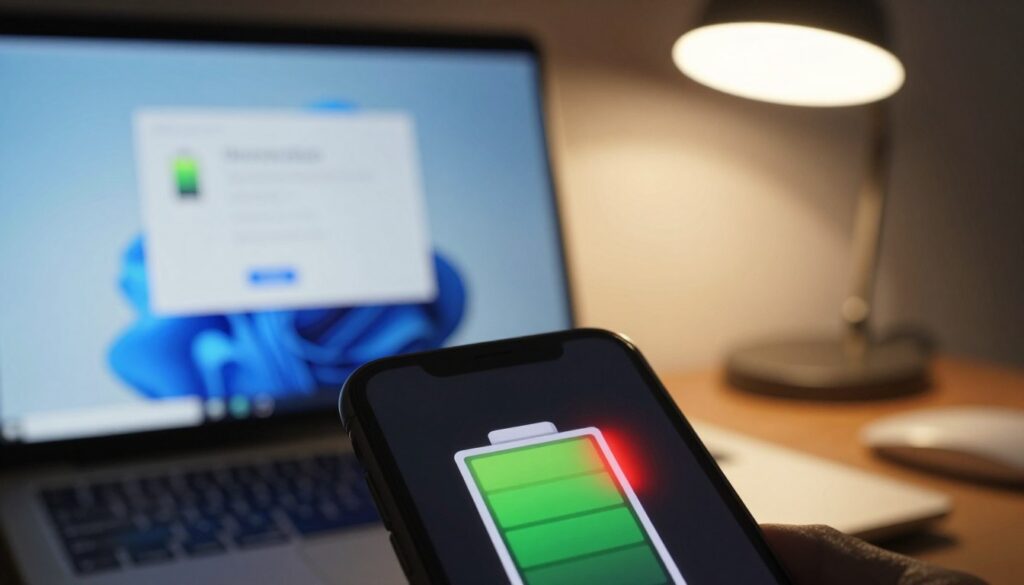
Red flags include an app that jumps to the top after an install, high background for an app you rarely open, or a big share listed under “system.” Note screen-on minutes and compare them to normal habits.
Also check signal quality. Poor reception makes the phone hunt for service and can cause faster drain. Try a controlled test: spend a day on Wi‑Fi in a good-signal area with typical usage. If the drain stops, network conditions were likely the issue.
- Use the usage screen to isolate top-consuming apps and services.
- Compare screen time to pre-install routines to separate real drain from new feature exploration.
- Watch the display timeout and notification behavior—small changes add up.
Common Post-Update Causes: Apps, Features, and Settings That Shift
New or shifted features can quietly start tasks that run all the time and sip power.
Silent automation and location services
Automation routines and assistant features may begin running without prompts. Things like location-triggered actions or background scans poll sensors frequently.
Samsung Galaxy examples such as Bixby routines can trigger more often after a change. That keeps the phone awake and increases screen activations and sensor use.
Charging and optimization toggles
System settings sometimes change with a software update. New charging optimization options can alter how the device tops up.
Google Pixel releases have added charging controls; some optional Pixel changes reduce max charge to protect long-term health, which users might notice.
Apps not yet optimized for a new android version
After a major android version rollout, some apps run poorly until developers push fixes. These apps may show high background activity.
Fixes include update apps, restrict background work, or uninstall an offending app until it’s patched.
Notifications and frequent wake-ups
Excess push alerts force vibration, brief screen-on events, and constant wake locks. Reducing noisy notifications cuts repeated wake-ups and perceived drain.
| Cause | Why it runs | Quick fix |
|---|---|---|
| Location-based routines | Triggers when entering/leaving areas | Disable or limit location permissions |
| Charging optimization toggles | New system charging rules change top-up behavior | Review charging settings; opt out if unwanted |
| Unoptimized apps | Background tasks not adapted to new version | Update apps or restrict background access |
Next: Once you identify which features or settings shifted, apply a few targeted tweaks to restore normal performance quickly.
Fix Battery Drain with the Highest-Impact Settings Tweaks
Start with a quick settings sweep to stop the biggest offenders. Make a few targeted changes and test for 24 hours to measure real gains. Below are the highest-impact steps you can take on most phones, including android phone and Pixel devices.
Turn on Battery Saver / Power Saving mode
Go to Settings > Battery > Power saving (or Battery and Device Care > Battery on Samsung). Enable the saver mode to cut background refresh, limit visual effects, and lower performance when needed.
Trade-off: apps refresh less often and animations slow, but this is the fastest way to reduce drain.
Enable Adaptive Battery
In Settings > Battery > Adaptive preferences, turn on Adaptive Battery. It learns your habits and throttles less-used apps to improve standby time without manual work.
Limit location and notifications
Audit location permissions per app: set most to “Allow only while using” via Settings > Location > Permission manager. Disable always-on location unless you need navigation.
Then open Settings > Notifications and mute nonessential app alerts so the screen wakes less often.
Cut display and wireless drains
Lower screen brightness, enable dark mode on OLED displays, and shorten screen timeout to 30–60 seconds in Settings > Display. Turn off always-on display and drop refresh rate from 120Hz to 60Hz when saving power matters more than smoothness.
Use Quick Settings to disable Bluetooth, location, or Wi‑Fi when not in use.
Small but effective extras
Remove unused accounts that keep syncing. Turn off “Hey Google” voice detection and use the power button instead for Assistant. Disable keyboard sounds and haptics to cut constant, small drains.
Test for 24 hours after applying changes to confirm reduced drain and return to normal use if you need to fine-tune settings.
When It’s the Update Itself: Bugs, Patches, and Battery Health Checks
Sometimes a shipped software update introduces a defect that raises background activity; confirm whether others report the same issue.
First step: check the vendor support site and community forums for known reports. If a patch is available, install it and then update apps from the store—app compatibility fixes are as important as OS patches.
Temperature and practical avoidance
Heat speeds up chemical reactions and increases power draw. Keep the device between 68°F and 86°F when possible.
Avoid leaving a phone in a hot car, charging in direct sunlight, or heavy gaming while plugged in. Remove thick cases during charging if the device runs hot.
When aging or diagnostics matter
Over time a cell holds less charge even with good settings. If excess drain persists, or the phone shuts down at higher percentages, get a professional diagnostic.
“If tweaks and patches don’t fix the issue, a trained technician can test capacity and recommend replacement.”
- Try patches and app updates first.
- Watch operating temperature and reduce heat exposure.
- Choose professional replacement over DIY swaps for safety.
Conclusion
A brief monitoring window will usually reveal whether normal post-install work or a deeper problem is at play.
Start by checking which apps and background services top the usage list. Then apply the high-impact settings: power saver, adaptive controls, and tighter notification or location permissions.
Also verify signal quality and run a quick temperature check; poor reception and heat often mimic software faults and raise drain on any phone or device.
Measure results across one to two full charge cycles before drawing conclusions. If unusually high draw persists after settings tweaks and patches, consider a professional diagnostic to check health and possible replacement.