Are Battery Health Apps Reliable on Laptops
Explore top battery health apps for laptops. Get insights into the best apps to monitor battery health, optimize performance, and extend battery life.
Reliable in laptops does not mean lab-grade precision. It means consistent indicators you can trust to guide replacement choices, warranty claims, and daily charging habits.
Modern Windows and Mac systems often hide deep telemetry, so third-party tools give estimates rather than exact lab results. Expect trend-focused monitoring, not a single definitive score.
Common actionable metrics include capacity estimates, cycle count, discharge rate, temperature, and charge behavior over time. These numbers help spot declines when tracked across weeks or months.
Different apps can report different values because each one reads and interprets system reports differently. OEM utilities and OS-level reports sometimes outperform third-party software because they access deeper device telemetry.
Key Takeaways
- Think of reliability as consistent, practical indicators rather than perfect measurements.
- Use trend monitoring over time instead of trusting one-time scores.
- Look for capacity, cycle count, discharge rate, and temperature as the most useful metrics.
- OEM and OS tools can offer deeper telemetry than third-party programs.
- Expect differences across platforms; evaluate tools by how they track change, not by absolute numbers.
What “Reliable” Means for Laptop Battery Health Monitoring Today
Readouts from software are only as good as the telemetry the operating system and OEM permit.
Why data can feel like a black box
When OS or firmware hides deep telemetry, tools must work with what the device exposes. That creates a black-box effect: apps see limited signals and infer the rest.
Reported values vs estimated values
Reported values come from the system. Estimated values are inferred from charge and discharge behavior. Those two can diverge when the OS reports a single point but the monitoring tool models trends.
When a rough guide still helps
Short-term noise from calibration, background tasks, and mixed workloads can distort instant readouts. Despite that, repeatable trends across weeks are useful.
Many experts recommend using trend-focused tools rather than trusting a single score.
| What to watch | What it shows | Why it matters |
|---|---|---|
| Capacity estimate | Approximate stored charge | Shows long-term decline |
| Cycle count | Number of full cycles | Predicts wear over time |
| Charge/discharge rate | Instant draw or input | Reveals abnormal drain |
Practical standard: prefer tools that show multiple metrics and repeatable trends. That way users make better charging choices and avoid surprise slowdowns or shutdowns during travel.
Key Battery Metrics Apps Track and What They Reveal
Key metrics give a clear window into how much runtime you can expect and why it changes over months.
Capacity and percentage estimates
Capacity measures how much energy the cell stores today versus when new. A drop in capacity is the reason runtime shortens.
Health percentage is often the current full-charge capacity divided by design capacity. Some tools read a system value; others estimate it from cycles and charge curves.
Cycles and long-term wear
Cycle count is a practical wear proxy. Seen alone it means little; paired with age and temperature it predicts long-term battery decline.
“Many devices hit about 80% of original capacity after roughly 500–800 cycles.”
Status, charge rate, temperature, and power draw
Charge rate and status (in watts or mA) spot slow charging or incompatible chargers. Temperature and voltage changes point to faster wear or sudden shutdown risk.
Power draw statistics reveal if idle drain comes from background processes rather than the cell itself.
| Metric | What it shows | Why it matters |
|---|---|---|
| Capacity | Stored energy today | Directly links to runtime |
| Cycles | Use history | Predicts long-term wear |
| Charge rate | Input/output speed | Detects slow charging or faults |
Battery Health Apps: How to Judge Accuracy Before You Download
Before installing any monitoring tool, check whether the developer documents how estimates are made and if the tool improves with more data. Good tools learn from repeated full-charge cycles and refine capacity models over time.
Prefer tools that use multiple full-charge cycles for better estimates
Estimates based on many cycles reduce noise from one-off readings. AccuBattery-style methods get more accurate after several full charges, while some other programs only show reported values.
Look for historical statistics and trend charts
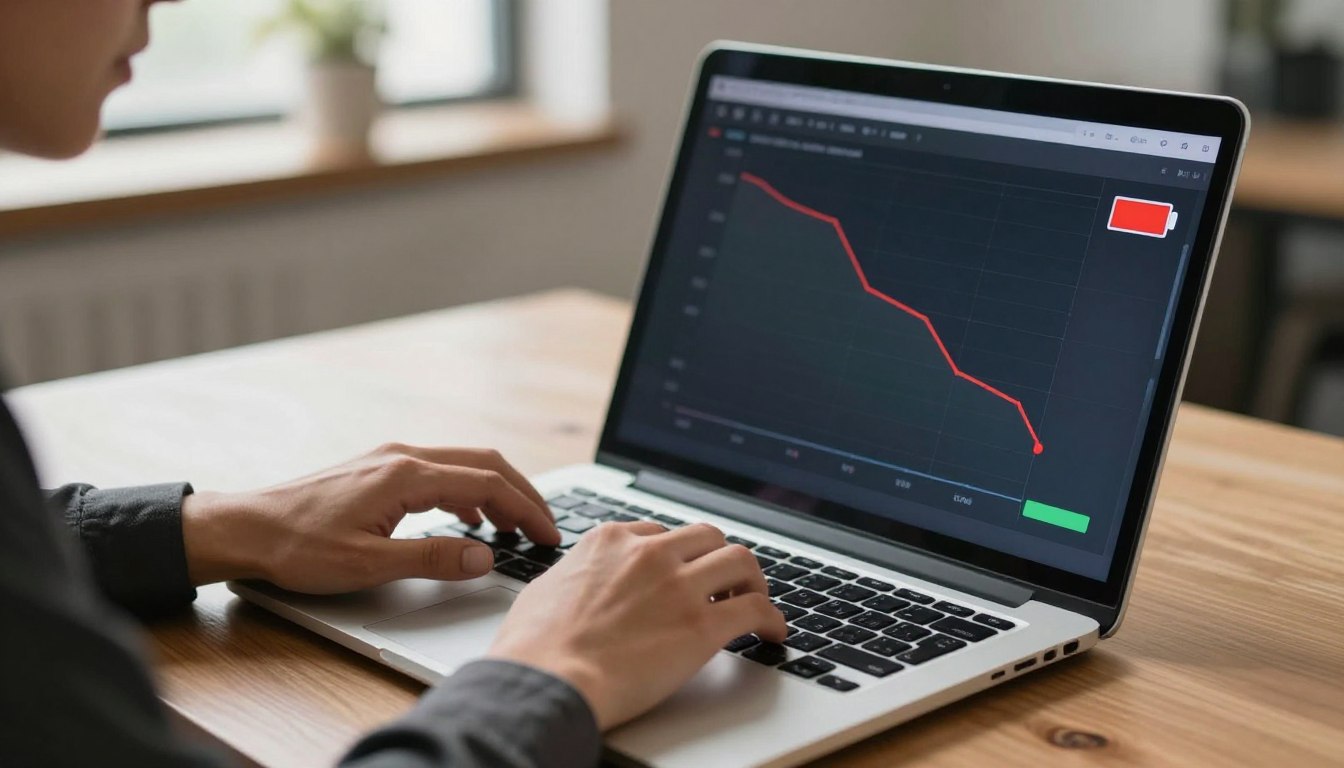
Short sessions can mislead. Multi-day charts reveal steady decline or unusual events that single scores miss.
Check background monitoring and resource trade-offs
Continuous monitoring gives fuller data but may raise CPU use and power draw. Decide if extra sampling is worth a small increase in usage.
Watch for ads, permissions, and bogus “boost” claims
Avoid tools that push one-tap boosts, require unrelated permissions, or show many ads. Those features rarely affect cell chemistry and often indicate low-quality software.
- Accuracy checklist: multi-cycle estimation, transparent methodology, and design vs current capacity comparison.
- Verify outputs by comparing at least two tools and OEM/OS reports.
“Compare trend lines, not single scores, to form a reliable view of long-term decline.”
Built-In and OEM Options That Can Beat Third-Party Tools
Built-in vendor tools can pull vendor-specific telemetry and calibration data directly from a laptop. That access gives them an edge for reliable reporting and tailored charging rules.
Why OEM utilities can access deeper device info
OEM software may read firmware-level fields and apply factory calibration that generic programs cannot. This often yields more consistent capacity and cycle readouts.
What built-in options typically provide
Common features include charge status, charge thresholds or limits on supported models, diagnostics, and performance profiles tuned for the model.
- Prefer raw numbers (capacity, cycles) with context (temperature, charging rules).
- Check OS tools first, then OEM utilities, then third-party monitoring for deeper charts.
- Take screenshots of status and diagnostics before service to speed warranty claims.
“When an OEM tool provides both raw telemetry and actionable settings, it often gives the best mix of insight and control.”
| Built-in option | Typical value | Why it matters |
|---|---|---|
| Charge thresholds | Limit max charge | Extends cell life |
| Diagnostics | Raw telemetry | Useful for service and warranty |
| Performance profiles | Thermal and power rules | Balance runtime and performance |
Best Battery Health Apps for Windows Laptops
Monitoring rate-of-discharge on a PC helps separate software-induced drain from genuine capacity loss.
Windows utilities vary from deep loggers to tiny meters. Pick a tool that matches your goal: troubleshooting, warranty evidence, or simple status checks.
BatteryMon for Windows
BatteryMon focuses on charge tracking and rate-of-discharge insights for laptops and UPS devices.
It shows clear charts, logs charge cycles, and highlights abrupt drops in percentage. That makes it useful for troubleshooting, purchase decisions, and commercial support cases.
Lightweight level meters
Small meters give an at-a-glance battery level and status in the taskbar or a widget.
They use minimal CPU and are ideal for students or commuters who only need a quick readout.
When to choose a deeper utility
Use a full monitor if your laptop dies suddenly, loses percentage fast, or drains while sleeping.
Pair findings with Windows built-in reports and test under repeatable conditions: same brightness, same workload, and identical power settings.
- Evaluation criteria: low overhead, clear charts, exportable logs, and minimal upsells.
- Prefer tools that produce repeatable trend lines rather than single-point scores.
“Discharge rate tracking helps identify whether drain comes from workload, background processes, or degraded capacity.”
| Utility type | Primary value | When to use |
|---|---|---|
| Rate-of-discharge tool (e.g., BatteryMon) | Clear charge logs and discharge curves | Troubleshooting, warranty evidence, purchase decisions |
| Lightweight level meter | Quick status and level in taskbar | Daily visibility, low overhead needs |
| Built-in Windows report | System-supplied capacity and cycle data | Baseline comparison and verification |
Best Battery Health Apps for Mac Laptops
Mac owners have two clear choices: monitoring tools that report metrics, or utilities that limit how the system charges to slow wear.
coconutBattery for Apple devices
coconutBattery is a monitoring-first option that reads internal status and shows current capacity and cycles across macOS and iOS devices.
It gives readable charts so you can track decline over weeks and compare values after reboots or updates.
AlDente for Mac
AlDente controls charging by capping the maximum percentage to reduce time spent at 100% charge.
This approach can slow long-term battery wear but does not restore lost capacity.
Choosing tools by goal
- For diagnosis: pick a monitor that logs cycles, capacity, and temperature over time.
- For longevity: use a charge-limiting utility and pair it with periodic monitoring.
“Compare readings across reboots, watch for temperature spikes while charging, and log cycles over months.”
Phone Battery Monitoring Apps and What Laptop Users Can Learn From Them
Lessons from phone utilities show why repeated cycles and background logging matter more than instant ratings.
AccuBattery’s method models remaining capacity by collecting charge and discharge events over many full cycles. That approach reduces noise and refines estimates as more data accumulates.
On phones, tools that log usage and cycles trade a bit of background sampling for clearer trendlines. AccuBattery needs several complete charges to produce tight capacity numbers, which is why it can outperform read-only utilities that display single reported fields.
Battery Guru–style features to look for
Usage statistics, alarms for level or temperature, wakelock checks, and exportable logs help pinpoint whether an issue is real or transient.
Many mobile tools are free but supported by ads or offer paid upgrades. That commercial model matters when choosing laptop equivalents—avoid cluttered interfaces that bury useful data.
Why instant “health” scores disagree
Some utilities read OEM-reported fields; others infer capacity mathematically. Differences in methods, sampling frequency, and OS access explain the variation.
OS support and APIs
When an operating system provides stable APIs, readings become more consistent across programs. Android 14’s new battery health API is one example where better OS data should improve cross-tool agreement.
“Trend-focused monitoring beats single measurements for reliable service and purchase decisions.”
How to Interpret App Readouts Without Misdiagnosing Your Battery
Start by matching what you notice—short runtime, random restarts, or trouble reaching full charge—with the numbers a tool reports.
Common failure signs to watch
Shortened runtime on a full charge, unexpected restarts under load, and difficulty reaching or holding 100% are clear red flags. Android Authority notes these are often signs a cell needs replacement.
What “good / normal / weak” ratings actually mean
Labels are coarse guidance. “Normal” can still feel poor for heavy users. Raw capacity and trend lines are more diagnostic than a single label.
Step-by-step validation
- Note symptoms and run a consistent task (video loop or benchmark).
- Record level and percentage drop over a fixed time.
- Compare discharge rate and power statistics across two or three runs.
Avoid misdiagnosis: sudden drains can come from updates, runaway processes, a faulty charger, or heat—not only cell aging.
“Compare and corroborate app results with OS or OEM status screens before deciding on replacement.”
Which App Is Best for You? Quick Picks by User Type
Pick the right tool by matching your daily routine to the kind of data you need. Below are fast recommendations for common users and clear buying guidance.
Students and commuters
Simple visibility matters most. Choose a lightweight tool that shows battery level and battery status in the taskbar.
Prioritize low resource use, clear alerts, and a clean interface for quick checks between classes or commutes.
Power users
Pick a deep monitor with battery statistics, temperature tracking, and discharge-rate logs. Look for exportable logs to troubleshoot performance over weeks.
Remote workers
Workday reliability needs alerts for rapid drain and spikes in background usage. Choose tools that flag unusual charge behavior before a call.
MacBook owners focused on longevity
Combine health monitoring (capacity and cycles) with a charge-limiting utility to extend usable life over years.
- Buying tip: prefer fewer ads, robust history features, and transparent reporting over flashy dashboards.
- Test free tiers, then upgrade when history length and support matter for long-term monitoring.
Conclusion
Conclusion
Trust comes from trends. Reliable monitoring hinges on seeing patterns across weeks and multiple metrics instead of trusting one-off numbers.
Start with OS or OEM tools for baseline readings, then add reputable third-party tools for charts, alerts, and deeper insight. Phone ecosystems taught us that multi-cycle estimates and solid OS support deliver more accurate data for android battery and phones alike.
Beware of flashy claims, one-tap “boosts,” and intrusive ads; choose tools that prioritize transparency and clear information battery reporting.
Practical steps: log cycles and capacity monthly, watch temperature while charging, and check sudden power draw before assuming hardware failure. Better monitoring extends device battery life, reduces surprise downtime, and helps time replacements wisely over the coming years.