Why Startup Apps Drain Laptop Batteries
Improve your laptop's startup apps battery life with our step-by-step guide. Get tips on optimizing startup apps for better performance.
Too many programs that launch at login can slow boot times and keep background services active. On Windows devices this steady power draw shortens battery life and makes the system feel warm and sluggish.
Modern software often runs update and sync tasks even when you are not using the device. Those background processes add a constant load that hits performance and power, especially in the first hour after startup.
This guide focuses on Windows 10 and Windows 11 and shows a safe workflow: spot symptoms, audit startup impact, disable nonessential items, then restart and test. You will not uninstall tools; you will control what launches and what remains running.
Safety first: keep security utilities enabled and change one item at a time to avoid breaking workflows. The result is faster boot times, lower resource use, and longer time between charges.
Key Takeaways
- Startup items can run unseen background services that drain power and hurt performance.
- Windows 10 and 11 include Task Manager and Settings controls to manage launch items.
- Audit impact first, disable selectively, then restart to validate gains.
- Leave critical security tools enabled and change one entry at a time.
- Controlling what runs at login improves boot speed and extends battery life.
How startup apps drain battery life on laptops
When Windows boots, core services come online first, then user-level programs and app helpers begin to launch.
This simultaneous activity drives heavy disk reads and forces the CPU to schedule many tasks at once. That spike raises power draw and can make the system feel slow right after login.
What happens during boot and login
Windows initializes services, then registered programs register and start. Each app or process adds its own load while the desktop finishes loading.
Background activity that keeps hardware busy
Sync clients, update helpers, and messaging tools often persist after the desktop appears. Those background processes use network radios and storage, stopping low-power states.
Why “Startup impact” matters
Startup impact is a quick way to spot the culprits. Windows rates items as No/Low/Medium/High based on CPU and disk use at boot.
- High/Medium impact entries usually create the biggest power and performance hit.
- More auto-start programs increase RAM pressure and paging, which keeps the system bus active.
- Reducing background processes lowers heat, cuts fan activity, and improves runtime on battery.
Signs your startup apps are hurting performance and battery
A quick-looking boot can mask ongoing activity that keeps the system busy and reduces runtime.
Look for a pattern: Windows reaches the desktop, but additional programs finish loading for several minutes in the background. That trailing activity causes the “boots fast, then slows down” effect.
Slow responsiveness right after login
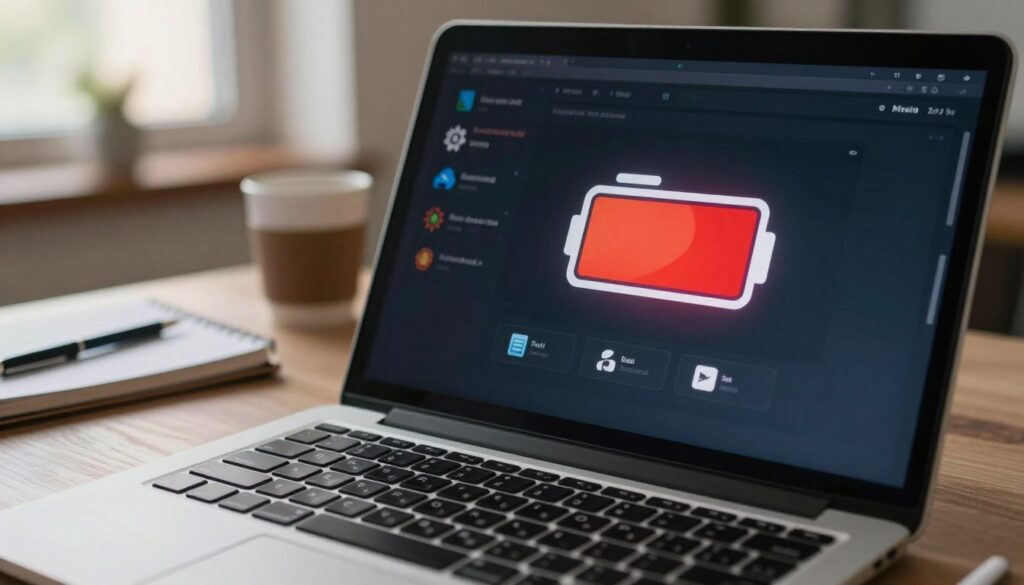
User-noticeable signs include delayed clicks, stuttering when typing, slow File Explorer openings, and sluggish browser launches in the first few minutes.
Hardware and resource clues
- Fans ramp up and the chassis feels warm — a sign of sustained CPU and disk use.
- High background CPU usage or elevated RAM pressure soon after boot suggests many processes are still initializing.
- Constant disk reads/writes during the first minutes often point to multiple auto-start services syncing or updating.
Why idle drains matter
If your battery or battery life drops quickly while you’re not actively using programs, background network activity or sync clients are common culprits.
Next step: once you see these patterns, use Windows tools to identify which items cause the biggest impact and disable them selectively.
Audit startup apps battery usage on Windows with Task Manager
Task Manager reveals which programs start automatically and how much they affect runtime.
To open Task Manager press Ctrl + Shift + Esc. On Windows 10 click “More details” then the Startup tab. On Windows 11 open Task Manager and select Startup apps.
Read the list and columns
The view shows Name, Publisher, Status, and Startup impact. Impact rates (High/Medium/Low) indicate which entries raise CPU and disk work during sign-in.
Prioritize and disable safely
Sort the list by Startup impact to surface High entries first. Right-click an entry and choose Disable. Confirm the Status changes to Disabled.
Research unknown items and test changes
For unknown entries open Properties and use Search online to verify purpose. Follow the safety rule: disable one item at a time, restart, and then test boot time, fan noise, idle CPU, and battery drain for the first 10–20 minutes.
“Change one entry, reboot, and verify — it’s the safest way to avoid workflow disruption.”
| Column | Meaning | Why it matters |
|---|---|---|
| Name | Program or service | Identifies the item |
| Publisher | Vendor or source | Helps spot system vs third-party |
| Status | Enabled / Disabled | Shows if it runs at sign-in |
| Startup impact | High / Medium / Low | Guides which to disable first |
Disable startup apps in Windows Settings for a quick battery win
The Settings panel offers a clear, safe way to control what runs when you sign in to Windows.
Open the path: press Windows + I → Apps → Startup. This is the fastest visual route to manage launch behavior on Windows 10 and Windows 11.
Use the list view to sort by Startup impact first. Then sort by Status or Name to see what is enabled and how items are ordered.
How toggles work and what to change first
The On/Off switch disables an app at sign-in but does not uninstall it. Toggling Off stops background services from starting automatically.
Prioritize disabling High and Medium impact entries you don’t need right after login, such as chat clients, media helpers, and update utilities.
Low impact items can still add to RAM use over time, so consider turning off extras if you want fewer background processes and better battery life.
Tip: use Settings for quick changes and the Task Manager or online search to research unknown items before you disable them.
Apply and verify: after making changes, reboot and monitor idle power draw and responsiveness during light use to confirm the improvement.
| Action | Why | When to use |
|---|---|---|
| Sort by Startup impact | Surfaces costly entries first | Initial prioritization |
| Sort by Status | Shows what runs at sign-in | Check enabled items quickly |
| Toggle Off | Prevents auto-launch without uninstalling | Disable nonessential programs |
| Use Task Manager | Research unknown entries | Before disabling unfamiliar items |
Advanced Windows tools for controlling startup programs and services
When Settings and Task Manager won’t remove a persistent entry, built‑in Windows tools let you drill deeper.
When to go beyond Settings: use advanced steps for stubborn entries, business‑managed machines, or when you need a full audit of services and scheduled tasks.
msconfig still exists as a launcher. Press Win + R → msconfig, choose Startup and then Open Task Manager on Windows 10/11. Task Manager remains the control point for enabling or disabling programs at sign‑in.
Clean the Startup Folder
Open Run and enter shell:startup for the current user, or shell:common startup for all users. Remove unwanted shortcuts to stop applications from launching.
Command-line and registry audits
For IT-style listings use:
- Command Prompt: wmic startup get caption, command
- PowerShell: Get-CimInstance Win32_StartupCommand | Select-Object Name, Command, Location
Location matters: a folder shortcut, a registry Run key, or a scheduled task each points to a different system-managed origin.
“Back up the registry before editing HKCU\Software\Microsoft\Windows\CurrentVersion\Run or HKLM\SOFTWARE\Microsoft\Windows\CurrentVersion\Run.”
Goal: fewer auto-start programs and services lowers background load and helps improve battery behavior during the workday.
What not to disable: keeping security and essential system tools running
Focus first on preserving essential protection: antivirus, firewall, and endpoint tools must remain active for most users.
https://www.youtube.com/watch?v=0vI1SyFxpx8
Optimizing launch items is about removing convenience programs, not turning off defenses that guard the device. Turning off an antivirus or endpoint client can open pathways for malware and hide persistent threats.
Why those protections should stay enabled
Antivirus and security software scan files, block malicious connections, and stop risky programs from running. A disabled firewall or endpoint agent reduces visibility for IT and increases exposure.
Common categories often safe to disable
- Messaging programs like Discord, Skype, or Microsoft Teams — open when you need them.
- Media players and launch helpers such as Spotify or iTunes.
- Vendor update helpers (Adobe, Google updaters) that run in the background.
Cloud sync and backup tools can be essential for some workflows. Confirm purpose before you disable startup items and prefer vendor-signed security processes to remain enabled.
“If the app does not need to be ready the moment you log in, disable its startup and open it when needed.”
Practical rule: disable startup entries for nonessential programs, keep security tools running, and make one change at a time so you can confirm stable system behavior.
When startup items re-enable themselves or keep coming back
Persistent launch entries often return because the source application or a scheduled trigger restores them. This can undo your attempts to disable startup and keep background processes active.
Check in-app settings and auto-update options
Open each program and look for a “run at startup” toggle. Also check auto-update and background permissions that may relaunch the program after updates.
Review Scheduled Tasks and hidden triggers
Task Scheduler can house tasks that restart updaters, sync tools, or telemetry. Inspect triggers, disable or change them, then reboot and test to confirm the entry stays disabled.
Use third-party manager tools with care
Microsoft Autoruns and similar tools expose entries in services, drivers, and shell extensions. These are powerful pro-level tools; do not disable items unless you know their purpose.
When persistence suggests malware
If an unknown process keeps re-adding itself, treat it as suspicious. Run a full system scan with a trusted antivirus and modern anti-malware tools before making deep changes.
“Change one entry, reboot, and verify — it’s the safest way to avoid workflow disruption.”
| Cause | Action | Why it matters |
|---|---|---|
| In-app launch setting | Turn off in the app | Prevents app re-enabling itself |
| Scheduled Task | Disable or edit trigger | Stops hidden relaunches |
| Auto-updater | Disable auto-start or auto-update | Prevents restore after update |
| Malicious process | Run full scan and remove | Protects system integrity |
Conclusion
Finish by turning the audit into a routine so your machine stays responsive and uses less power. ,
Do this next: open Task Manager, spot High-impact items, then use Settings to disable selectively. Disable one entry at a time, restart, and test for normal behavior.
Keep essential protection like antivirus and core system services enabled. Close convenience programs and applications that can be opened when needed to reduce background load.
Expect measurable wins: faster boot feel, quieter fans at idle, and longer runtime on a single charge. Re-check what launches after installs or major updates to keep those gains.