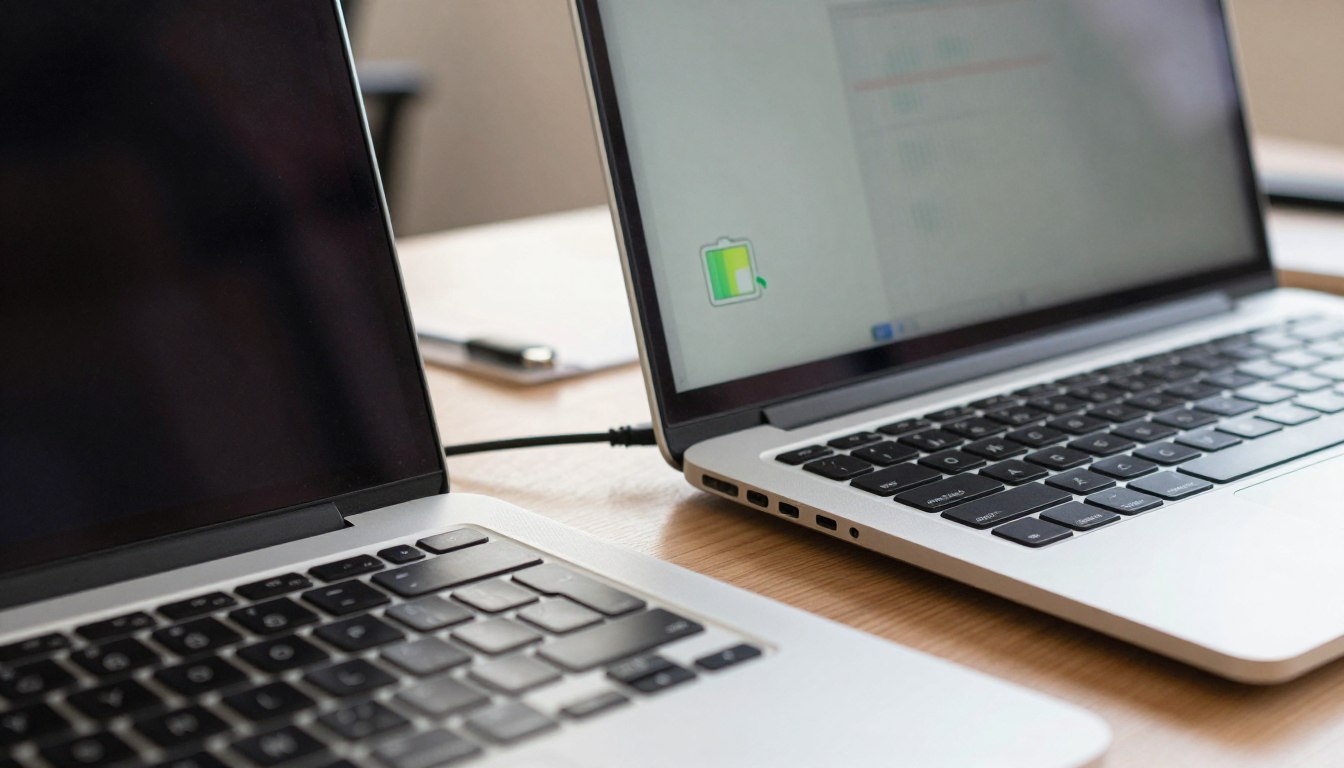
Why Laptop Battery Drains Fast Even When Idle
Discover why your laptop battery drains fast even when idle. Learn troubleshooting tips to resolve the issue and extend battery life.
Many people notice their device loses charge while it sits unused. Advertised run times come from controlled tests. Real use, apps, and background tasks change that result.
Even when a notebook looks idle, the operating system still runs updates, indexing, syncing, and security scans. Hardware parts like displays and network radios add steady power draw. These activities explain why a charge can fall during short idle periods.
This guide will define the problem in plain terms and show how to spot what is causing the loss. You will learn quick fixes and deeper checks, and how to tell if wear or settings are to blame. Windows includes built-in tools such as Battery usage and Task Manager that reveal drain sources without extra apps.
Test changes for a few days under normal use to confirm improvements. The goal is to extend usable time and to determine whether this is normal behavior or an actionable issue.
Key Takeaways
- Idle power loss often comes from background tasks and hardware radios.
- Real-world run times differ from advertised figures.
- Use built-in Windows tools to find major power users.
- Try simple settings changes before assuming wear is the cause.
- Monitor results over several days to confirm fixes.
What “Idle” Battery Drain Really Means and What’s Normal Today
An apparently unused device frequently carries out hidden tasks that consume power.
The term idle covers several states: screen on but not active, screen off while logged in, lid closed (sleep or modern standby), or sitting at the lock screen. In each case the system can still sync, index files, and run scheduled maintenance.
Why advertised battery life rarely matches real-world use
Manufacturers test under controlled settings: fixed brightness, limited networking, and light workloads. Those lab numbers show best-case life, not typical daily use. Expect some drain per hour based on age, settings, and background activity.
Quick signs your battery draining is abnormal
- Sudden percentage drops or rapid battery draining without obvious apps.
- Warm or hot chassis while idle, or fans ramping up with no visible load.
- Frequent wake events or constant network activity that keeps components awake.
Heavy background tasks often cause heat and fan noise even when the desktop looks quiet. A simple way to isolate factors is to test with Wi‑Fi off, reduced brightness, and minimal apps. If results still look abnormal, move on to causes and diagnostic tools.
Why My laptop battery drains fast When Idle: The Most Common Causes
Many hidden services and tools keep working quietly, using energy even when you aren’t actively using the device.

Applications running in the background and hidden processes
Background applications, update services, and cloud sync tools run without a visible window. These processes use CPU, memory, disk, and network resources and cause steady drain.
High-performance components and power-hungry modes
High-end CPUs, discrete GPUs, and High Performance profiles keep components active. Performance modes prevent deeper sleep states and raise overall power use.
Screen brightness, high-resolution displays, and browsing
Display power is a major factor. High brightness and ultra‑high‑resolution panels use more energy than basic screens.
Multiple browser tabs, autoplay video, and heavy web apps can keep the processor busy even when you think the system is idle.
Peripherals and radios
External drives, dongles, and even phone charging over USB draw current while connected. Wi‑Fi and Bluetooth can also search and sync in the background, adding to battery drain.
Next: learn how to measure what is using power on your device with built-in diagnostic tools.
Diagnose What’s Draining Your Battery Using Built-In Tools
Hidden tasks and active services can keep a machine using energy even when you aren’t touching it. Start by using the built-in Windows views to find the top offenders before changing settings at random.
Check Battery usage in Settings
Open Settings, go to System, then Battery. The menu shows which apps and services used the most power over recent hours. Focus on items with a large share over 24 hours rather than a single spike.
Quick Task Manager check
Press Ctrl + Shift + Esc to open Task Manager. View CPU, Memory, Disk, and Network columns to spot what stays active while idle. Close obvious non-essential programs first — extra browsers, chat clients, and launchers.
Spot suspicious processes and scan
If an unfamiliar process shows sustained ~8–10% or more usage, research its name before ending it. Run Windows Security (Defender) or a trusted tool like Malwarebytes to scan for malware. Beware of fake anti-malware installers.
- Goal: identify the top two or three offenders so fixes are targeted.
- Use these tips to link symptoms (heat, fans) to the measured power use.
Quick Fixes in Power, Display, and App Settings That Reduce Battery Drain
Small changes to power and display preferences often cut idle energy use immediately.
Switch power mode or enable Battery Saver
Use the battery icon or Power & Sleep settings to pick Best power efficiency or turn on Battery Saver. This reduces background activity and can lower heat and idle draw.
Lower screen brightness and shorten timeout
Reduce brightness to the lowest comfortable level. Shorten screen timeout and lock settings under System > Power & Sleep so the screen turns off sooner.
Stop unnecessary background applications and close programs
Disable background permissions for apps you don’t need. Close unused applications running in the tray instead of leaving them minimized.
Turn off keyboard backlight and unplug peripherals
Dim or disable the keyboard backlight when lighting allows. Remove USB drives, dongles, and other devices that draw current while idle.
Disable Wi‑Fi and Bluetooth when not in use
Turn off radios when offline and forget unused networks so the system stops reconnecting. After changes, check Battery usage to confirm reduced idle drain.
Deeper Troubleshooting When Battery Life Still Drops Fast
If basic power tweaks did not solve the issue, audit recent software and system changes that can force higher power use.
Check power profiles and menus — open Settings > System > Power & Sleep and verify the active plan. Confirm sleep and hibernate values and inspect any OEM or driver power menus that might lock high performance.
Remove unwanted programs and startup services
Use Task Manager (press Ctrl + Shift + Esc) and open the Startup tab. Disable nonessential programs that run at boot. Uninstall unused apps from the Start menu to cut background services that run constantly.
Scan for malware and suspicious processes
Run Windows Security (Defender) and a reputable scanner such as Malwarebytes. Avoid random “free” antivirus downloads that are often scams and can themselves become resource hogs.
Re-test over multiple cycles and consider calibration
After changes, track charge and discharge over several full cycles. One day may mislead because updates or indexing run once. If readings look off, perform a calibration: charge to 100% plus two hours, discharge until sleep, wait five hours, then recharge uninterrupted.
| Step | Action | Why it helps | When to replace |
|---|---|---|---|
| Verify power plan | Settings > System > Power & Sleep | Ensures no profile forces full performance | If profiles are normal but drain persists |
| Manage startup | Ctrl + Shift + Esc → Startup tab | Stops unnecessary services from auto-launching | If disabling doesn’t help |
| Malware scan | Windows Defender + Malwarebytes | Removes hidden processes that spike CPU | If infections or persistent processes are found |
| Calibration & inspection | Full cycles + visual battery check | Aligns meter and reveals physical wear | Swelling or major capacity loss |
Final note: batteries wear with time. If the computer shows swelling, bulging keys, or short run times after thorough checks, replacement is the practical fix.
Conclusion
When a device loses charge while sitting unused, the usual culprits are simple and measurable.
Most idle battery drain comes from background activity, aggressive performance settings, high display power use, or always‑connected radios — not necessarily a defective laptop.
Start by opening Settings > System > Battery to see top offenders, then confirm with Task Manager what stays active when the system should be quiet.
Try these high‑impact fixes first: use Best power efficiency or Battery Saver, lower screen brightness, shorten screen timeout, close extra apps, unplug peripherals, and disable Wi‑Fi/Bluetooth when not needed.
If charge loss persists after a few days of testing, move to deeper steps: remove bloatware, clean startup entries, run malware scans, and perform calibration. If the device is older or shows wear, replacement may be the most cost‑effective way to restore normal runtime and life.